

7 years later, and China is still at 7nm.
- Despite a large marketing effort to persuade the world that it is close to being self-sufficient in semiconductors, the evidence points to the contrary, meaning that China is, in all likelihood, stuck at 7nm with an increasingly uncompetitive process.
- This means that when it comes to a choice, the Western variant will be cheaper and will come with no strings attached, making it a more appealing choice for those deciding which way to go.
- Huawei’s latest Mate Book Fold laptop is a triumph of industrial design and demonstrates just how much it has learned from the Apple assembly ecosystem in China, but at its heart is a chip that uses the same technology that Huawei announced in 2018, nearly 7 years ago.
- At the time, this was a big deal and prompted all sorts of speculation that China had broken the restrictions placed on it by the USA, but in the following 7 years, there has been little in the way of advancement.
- At the same time, TSMC, Samsung and Intel are now all working on 2nm, which is some 3 generations ahead, and with every new generation, China is likely to get left further and further behind.
- This is because the technology that is being adopted in China is based on a technique pioneered by TSMC, which it quickly abandoned when it became clear that it was not very economical at 7nm and impractical at 5nm and beyond.
- This is why the entire industry has switched from a lithography process using a 193nm laser (DUV) to one using a 13nm laser (EUV), but because China does not have access to EUV, it is stuck with DUV.
- At 7nm, a technique called multi-patterning can be used to create 7nm chips with the 193nm laser, but it has many steps, and, as a result, the yields tend to be much lower.
- Semiconductor economics are all about yield and chip size and on both of these metrics, multi-patterning at 7nm is falling further and further behind.
- This is why RFM’s long-held view is that China will be able to produce technology that can compete with the Western version on pure specification, but will really struggle when it comes to the economics.
- China appears to be going all in this technique with 12 7nm fabs under construction around the country, which leads me to think that there is not much further that China can take this technique.
- I also find reports of impending breakthroughs on a homegrown variation of EUV about as credible as today’s statements from Zhu Min (ex-deputy governor of the PBOC), who stated that China will produce more than 100 DeepSeek-like breakthroughs in the next 18 months.
- (To remain on track, China will need to have produced 3.8 DeepSeek-level breakthroughs by the close of business on Friday.)
- EUV is extremely difficult to get right, and it has taken ASML (originally helped by Intel) 30 years to get it to work properly.
- Consequently, I think that with enough effort and time, China will perfect EUV, but by the time it has done so, silicon, as a medium for chips, will have become obsolete.
- Hence, I think that for domestic silicon manufacturing, 7nm multipatterning is about as good as it is going to get and the economics of technology produced using this process will get fall further and further behind as time goes by.
- This is supported by the fact that the Mate Book Fold is using this 7-year old technology while the latest MacBooks and Laptops are at 4nm or 3nm and advancing with every generation.
- This means that foreign-made computers are more powerful, weigh less, have a longer battery life and cost less to purchase.
- This is exactly the kind of comparisons that I think will be prevalent in all of the new technologies as and when they come to market.
- For example, an Indonesian robotaxi company which will be choosing between a Chinese autonomous driving solution (perfectly good) and a Western one will find that the Western one will be smaller, consume less power and be cheaper to buy.
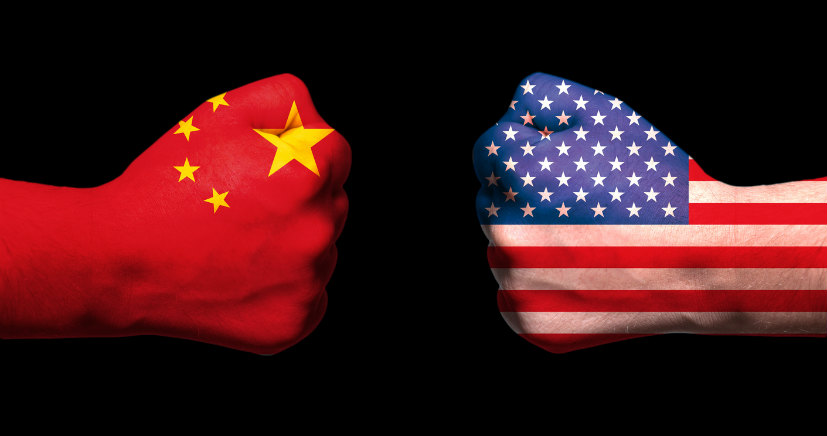
- This is a crucial element in the ideological struggle that is going on between China and the West at the moment, and it is in the 3rd party countries where I think that the battle will be decided.
- The initial signs are positive for the West as the Middle East is already pivoting towards the West and away from China, and with these economics, the rest could easily follow.
- Hence, I think that Chinese technology standards will prevail in the domestic market but will struggle to win widespread adoption overseas.
- As the technology industry splits along these lines, the outlook is increasingly that there will be two standards for every technology with China adopting one and the rest of the world the other.
- This is bad news for everyone because with the Internet split into two pieces rather than one, its capacity to generate value and growth will be lower than it otherwise would have been.
- From this, there are no winners, regardless of who prevails in the ideological struggle.







Blog Comments
TLT
June 25, 2025 at 6:51 am
You overlooked a detail. The Mate Book Fold project was approved at least a year ago, and the chip model and specifications were determined at the time of approval. The chip must be used during testing, which means that the chip must have been mass-produced a year ago? Otherwise, how could sample testing be conducted? How could we possibly use chips that were only mass-produced this year, as we still need to open molds and solve bugs in the middle? This chip was approved at least two years ago, and it still needs to be designed, taped out, and bug fixed to ensure that the energy produced for this laptop last year can be used.