

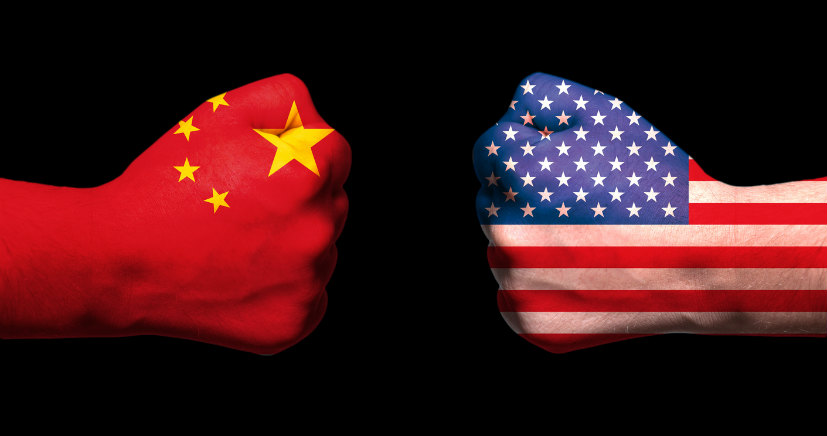
Open-source strategy unlikely to deliver.
- Baidu has decided to contribute its ERNIE 4.5 foundation model to the open-source community, moving it into line with its Chinese peers once again raising the question of why the Chinese state has allowed its state-of-the-art AI technology to walk out the door.
- RFM Research has concluded that a strategy to consolidate global AI onto Chinese models will not work like it did in solar panels.
- As of June 30th 2025, ERNIE Bot 4.5, which was launched in March 2025, is available, including its weights, model code and inference pipelines under the Apache 2.0 license in all of the usual places.
- This brings Baidu into line with its peers, meaning that almost all of the major Chinese AI models are available with their model weights for free on the Internet.
- Since 2015, China has had in place the National Security Law, which was updated in 2022 and 2023 to safeguard technologies that the Chinese state considers to be of national interest.
- Since that time, any technology considered to be of interest to national security requires a license to be exported from the Chinese mainland, which means that the Chinese state deliberately chose to allow the export of its latest AI models.
- This is a strange state of affairs as the example of BYD reveals just how sensitive China is when it comes to the potential loss of technology to unfriendly powers.
- BYD is currently building an EV factory in Mexico, which will utilise the company’s latest battery and smart car technology.
- The final approvals for this factory are currently on hold as a result of concerns about BYD’s technology leaking over the border, although the current trade tensions have also not helped matters.
- Consequently, if China is worried about EV technology leaking to the USA, it is counterintuitive for it to be willing to put its best AI on the internet for anyone to use for free.
- This means that there must be some other motive for allowing AI to be freely available.
- I think that there are two possibilities
- First, PR and propaganda: where the release of DeepSeek into the open source allowed it to be independently verified.
- This means that the claims that DeepSeek made could be checked, which added a great deal of credibility to them.
- The net result was that the view that China was miles behind in AI was shattered, and it became clear that Chinese AI was demonstrably as good as anyone else’s.
- This did not come as a huge surprise to me, but to the market and commentariat, this resulted in a significant change of opinion.
- It greatly enhanced China’s reputation as a technological superpower, which, combined with a softening of the hardline against the private sector, breathed new life into the technology sector.
- China needs the private sector to compete against the USA and releasing its AI to open source, demonstrates its ability and its progress.,
- Second, industry consolidation: which would be a rinse and repeat of what happened in solar panels and what is happening in EVs and batteries.
- In solar panels, China subsidised its producers so all of the foreign competition went out of business, allowing China to consolidate the entire supply chain and ecosystem in China.
- The result is that China is now so dominant in this space that no one really has a chance of competing.
- If China puts its best AI into the open source, it puts pressure on the rest of the industry, and potentially many users will start basing their services on the free Chinese models.
- This could begin the consolidation of the industry onto a Chinese foundation, but I don’t think that it is going to work.
- This is because there is already plenty of AI from Meta and Mistral available in the open source, and because RFM Research has concluded that China will end up not being cost-competitive on AI.
- Consequently, I think that China has put itself back on the technology landscape with its AI models, which compete effectively with everyone else, but this is not going to allow China to take over the AI industry as it has in solar panels.
- I would not be surprised to see the Chinese love affair with open source end when it does not deliver the desired results, as when it comes to PR, China has already enjoyed most of the gains that open-source is likely to deliver.
- I think that Chinese AI is likely to end up being dominant in the local market, but that it will struggle to get much traction overseas due to its inability to compete on cost.
- This is where the West has an advantage, as it will be competing in non-affiliated countries with technology standards that have a lower cost of ownership.
- It is in the non-affiliated countries where the outcome of the ideological struggle is likely to be decided.






Blog Comments
TLT
June 30, 2025 at 11:46 am
Unfortunately, some people still stubbornly adhere to Western centrism.
RICHARD WINDSOR
July 3, 2025 at 10:22 am
Your point being ?