

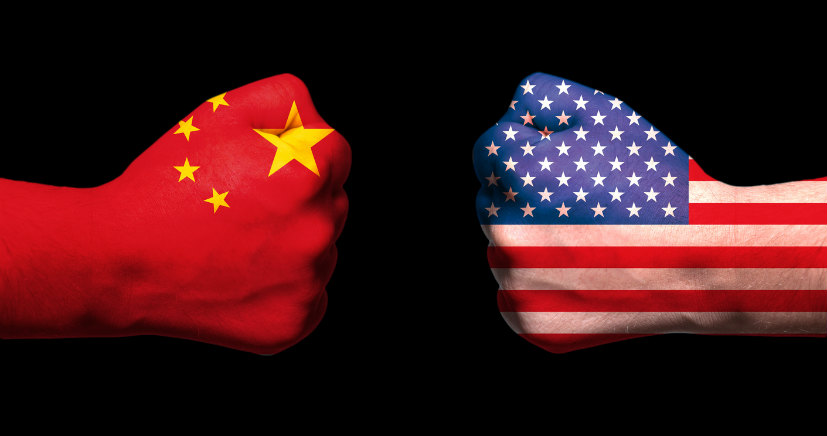
Chinese regulators bolster US ambitions.
- The Chinese regulatory move to force Nvidia out of the domestic market does more to extend the USA’s lead in commercialising AI across the world than any sanction imposed by the US Department of Commerce could ever hope to achieve.
- Enraged by commentary from the US Commerce Secretary, the Cyberspace Administration of China, the Ministry of Industry and Information Technology (MIIT) (CAC), and the National Development and Reform Commission (NDRC) have increased their efforts to persuade the domestic AI industry from buying chips from Nvidia, AMD or anyone else from overseas.
- Chinese regulators’ powers of persuasion are far greater than those in the West, and as a result, there have already been signs of order curtailment.
- This is evidenced by cuts to H20 orders by Chinese companies and Nvidia telling its suppliers to pause production of components used in the H20 system.
- This comes as a blow to Jensen, who has been tirelessly lobbying both the US administration and the Chinese state to allow Nvidia chips to be sold in China, but I don’t think it is really a blow for Nvidia.
- In the short term, demand is strong enough that any capacity that was earmarked for H20 chips to be sold into China can be switched into producing H100 or Blackwell chips for sale elsewhere.
- In the long term, I don’t think that losing the Chinese market will do Nvidia any meaningful harm because what it loses in China it will make up elsewhere in terms of greater opportunity.
- This is because by accelerating the move away from foreign chips, China is hindering the development of its homegrown AI both in terms of speed of development and, most crucially of all, cost.
- There are signs of this everywhere:
- First, DeepSeek R2 delays: where DeepSeek has yet to release its long-expected successor to R1, which is now looking dated given the flurry of updates from its global competitors.RFM Research has concluded that R1 was developed on the Nvidia H800 (which DeepSeek ingeniously enhanced) while the R2 is being trained on home made AI chips from Huawei.
- These chips are made using the 7nm multi-patterning technique, meaning that yields are low and costs are high and the chips are best described as “usable”.
- However, it appears that DeepSeek has had more problems than expected and has been struggling with stability, internal communications and software problems that have made it difficult to complete a training run.
- R2 was supposed to launch in May 2025, but here we are in late August, and still, R2 is not ready.
- Second, Ascend feedback: where multiple sources have stated that while the Ascend family of chips are “usable”, they suffer from multiple issues that make it harder and more expensive to train AI on Huawei than on Nvidia.
- The biggest problem, as I see it, is the software, where the entire Chinese industry has grown up using Nvidia CUDA and will now have to switch to Huawei software.
- This is far less mature than CUDA, which has been around for over 20 years and suffers from being immature as well as not well known among its target market.
- Third, Semiconductor industry problems: which are likely to result in China remaining stuck with an inefficient process for 7nm chip production and unable to progress further.
- The experience of Intel and TSMC indicates that to go beyond 7nm requires a move to extreme ultraviolet lithography (EUV), which the Chinese have been unable to acquire.
- Furthermore, I suspect that given the complexity and precision that this technology requires, China will be unable to recreate it within any commercial time frame.
- This means that for the foreseeable future (10 years+), China will remain at 7nm and go no further.
- The practical upshot of this is that as China develops more and more of its AI on homegrown chips, the less competitive its AI will become when it comes to the cost of training and the cost of inference.
- While this is unlikely to make much difference in the home market, it will make a large and, I think, decisive difference in foreign countries that are not affiliated with one side or the other.
- Historically, Chinese technology has been attractive because it was good and much cheaper than its Western variant (e.g. Huawei 5G), but in AI, this will not be the case.
- With AI, I think it will end up being just as good but more expensive to own and operate, removing the biggest draw to use Chinese technology outside of China.
- This is where I think Nvidia will make up overseas, what I think it is almost certain to lose in the Chinese market, as Western AI will be a more attractive proposition for 3rd party countries choosing between the two competing standards.
- We have already seen some evidence of this as Saudi Arabia, UAE and potentially Qatar are already pivoting away from China, and others may follow.
- The net result is that while the Chinese can compete on performance, they can’t compete on economics, and it is the economics that will decide which version non-affiliated countries adopt most of the time.
- This is why I think the Chinese are behind, and there is very little scope to catch up, given that it has no access to cutting-edge hardware.
- This will be crucial to the ideological struggle that is being played out between China and the West, and at the moment, I think it is the West that has the advantage.






Blog Comments
silenttang
August 24, 2025 at 4:01 pm
Huawei is about to launch a mobile phone using 5nm technology chips, please enjoy it. Of course, you can continue to say that in the foreseeable future (10 years+), China will remain at 5nm and will not further develop.