
Amazon badly needs material improvement.
- Amazon has finally launched devices that are capable of greatly improving the Alexa experience, but it remains to be seen how well it works and given how bad Amazon is at AI, I am not optimistic.
- Amazon held an event in New York where it launched four new Echo products, two TVs, A Fire TV USB stick, Ring devices and cameras and a Kindle tablet for note-taking that aims to compete with Remarkable.
- The media products, home security and writing are evolutionary and do not represent a big change in Amazon’s approach, and so I will not address them further today, other than to say that while the headline blurb says that the TVs are designed for Alexa+, the store listings make no mention of this whatsoever, underpinning my scepticism.
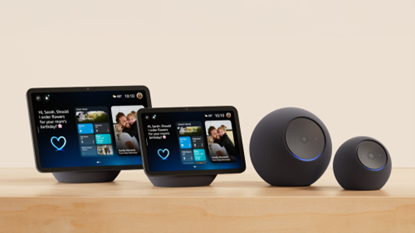
- The products signalling a change in Amazon’s approach to AI are the four new Echo products.
- First, Echo Dot Max and Echo Studio: which are audio-only products and have been designed for Alexa+.
- Alexa+ is the next generation of Alexa, which uses LLMs for the first time to power the voice UX on the device.
- RFM Research has long concluded that one of the superpowers of LLMs is the ability to power voice-based user experiences, providing a natural, intuitive and fun-to-use voice experience for the first time.
- Almost all of the complaints that I have heard and experienced with the current Alexa are that it is way too stupid to be of much use beyond setting timers, turning the lights on and playing music (and it isn’t even very good at that).
- LLMs have great potential to fix these problems, but I have long argued that to do so, they must run the main portion of the service locally and go to the cloud only when necessary.
- This makes the experience much more natural and more like talking to another person, which will drive engagement.
- This is what the custom chips AZ3 and AZ3 are all about, as these are custom AI accelerators designed to run AI models on the device and will almost certainly be running the Alexa algorithm on the device.
- This will be a hybrid system which defaults to the device wherever possible to optimise the experience and then goes to the cloud when it needs to.
- This, combined with better acoustics, is why the price of the cheapest Echo more than doubles to $99.99.
- Second, Echo Show 8 and Echo Show 11: which are basically the Echo Dot Max with screens stuck on them.
- These are designed to be able to offer a more rounded experience in terms of showing photos, videos or footage from Ring cameras.
- However, if Alexa+ is as good as Amazon says it is (big if), then the Echo Show will become more of a niche product.
- This is because screens are often used for answering a request when the voice output is not up to the job.
- If Amazon has fixed Alexa, then the screen on these devices should be used less and the voice output more, given its much wider range of capabilities.
- Third, Alexa+: which is clearly aimed at Amazon Prime subscribers, which by my estimate is somewhere around 250m – 300m globally.
- This is because to use Alexa+ without being a Prime member costs $19.99 per month, which is more expensive than a Prime membership in its entirety ($14.99 per month), meaning that no one in their right mind will sign up for this plan.
- Instead, if it proves popular, it could drive more sign-ups for Prime membership.
- Amazon has also said that any of these devices will come with Alexa+ out of the box, but it hasn’t said for how long that will last.
- Fourth, Ambient AI: which is only possible because all of these devices will be plugged into the wall all of the time.
- What Amazon means by this is that the sensor suite on the devices is running all of the time to detect what is happening in the room so that it can make proactive suggestions as well as tune the microphones for speech that comes from far away.
- Ambient AI is something that Meta Platforms and Google have also talked about, but the problem is that it remains power hungry, meaning that on a battery-powered device, it can’t run in the background as it will degrade battery life materially.
- This is why on Meta’s glasses, the user has to turn Live AI on and off manually, as we saw in the demos a couple of weeks ago.
- The net result is that this is a badly needed step forward for Amazon, which has been very slow to make this obvious move.
- I put this down to the change in management in devices and the fact that designing good hardware takes time.,
- Fortunately, everyone else is not going much faster, and the edge AI proposition and the use of AI agents to control Digital Life services and devices remain at an early stage.
- This means that the new Alexa will live or die on the merits of its user experience, and given Amazon’s pretty dreadful record in AI, I am not optimistic.
- However, if Amazon has taken some of Anthropic’s IP and put it into the new version of Alexa, then I will be more hopeful, but there is no mention of this anywhere.
- Hence, while I have more faith in the hardware now that Panos Panay is in charge, the jury remains out whether Amazon has done a good job with the brains of Panos’ very nice devices.