

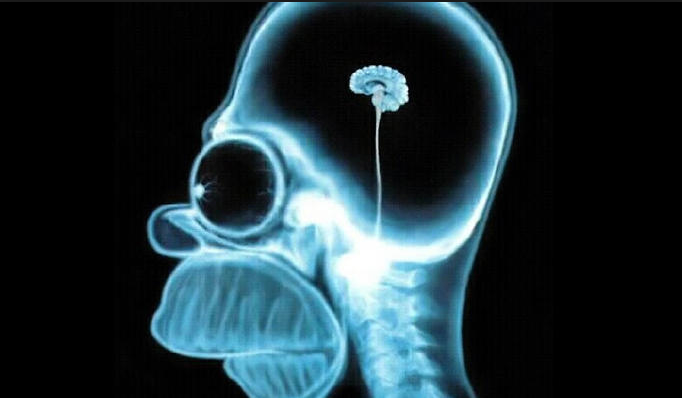
Doomsayers and cool-aid drinkers are both wrong.
- The debate over the size and duration of the AI bubble ranges from “cataclysm incoming” to “humans will be retired in 5 years” and as usual, I think that reality is somewhere in the middle.
- The AI Bubble has been a hot topic of debate over the last few weeks with many luminaries and business leaders all chiming on the issue and the range of opinion is wide.
- First, doomsayers: which is where AI does nothing to improve productivity and almost all of the hundreds of billions of dollars being sunk into data centres is wasted.
- At some point, the market will realise this, stop investing, and the LLM companies will run out of money and be forcibly acquired or go bust, while everyone else has their valuations heavily cut.
- This view cites studies by Bain and MIT which see revenues falling far short of the investments that were made to produce them and 95% of all projects deployed to date doing nothing to enhance returns.
- Both of these studies are nuanced and so I think that the headlines do not necessarily offer an accurate picture of reality.
- This view also sees AI as little more than a purveyor of “AI Slop” and so unreliable that it has very little practical use.
- The result is an Internet-style correction that lasts for 3 or 4 years while everyone retreats to the sidelines and waits for AI to live up to the hype that has been confidently predicted for it.
- Second, cool-aid drinkers: This is the notion that very soon, the machines are going to become more intelligent than humans and that 90% of the current economically active tasks currently done by humans will be done by machines.
- This is mostly perpetuated by the LLM crowd, who are raising billions of dollars almost every week at ever more crazy valuations and need this kind of hyperbole to keep the numbers going north.
- It is this that stops the hyperscalers from worrying about spending too much on data centres as they are all in a race with each other to see who can get to superintelligent machines first.
- Third, Somewhere in the middle: which is where I think reality is to be found.
- Two things can be true at the same time and while we are certainly in a bubble, there are real and tangible benefits to be had from AI, which will generate substantial revenues and profits and change the face of many businesses.
- It could also change how the internet is used by consumers but as always, these sorts of transitions take time.
- This means the humans are not about to retire nor are they about to be slaughtered by an army of robots, but they are going to have to learn to do many things differently.
- Almost all of the empirical evidence points to this scenario meaning that some adjustment to reality is needed which is going to result in some form of correction.
- The net result is that I think that the doomsayers and the cool-aid drinkers represent two extreme ends of the spectrum of opinion and that reality lies in the middle.
- Given the weight of empirical evidence that exists that demonstrates the limitations of these systems and the methods being used to improve them, I am inclined to think that reality is closer to the doomsayers than the cool-aid drinkers but not by a large ammount.
- This means that there is going to be a correction, but because there are already use cases with billions of users, it is not going to be nearly as bad as the Internet Bubble.
- 25 years ago, billions were spent on putting fibre in the ground, and no one showed up for more than 5 years, resulting in large and long-lasting reset.
- With AI, everyone is already showing up, as the revenue figures of the hyperscalers indicate, but when they are going to see a return and how large it will be is less clear.
- The problem is that many companies (especially the privately held LLM companies) are priced for the cool-aid scenario, meaning that they are going to fail to live up to expectations.
- Hence, the kind of reset I see is one which is fairly short but also pretty sharp, where the money runs out and the LLM companies remain unable to turn a profit.
- It is at this point that Amazon acquires Anthropic, and the likes of OpenAI, Mistral and so on are forcibly acquired or end up in consolidation.
- Everyone else is likely to see a 25% – 50% decline in their valuations, which could quite possibly be a great entry point at which to buy the winners who will probably slowly recover into and surpass previous valuations as real revenues and profits materialise.




Artificial Intelligence – ...
19 October 2026