

Argument for exports is weaker.
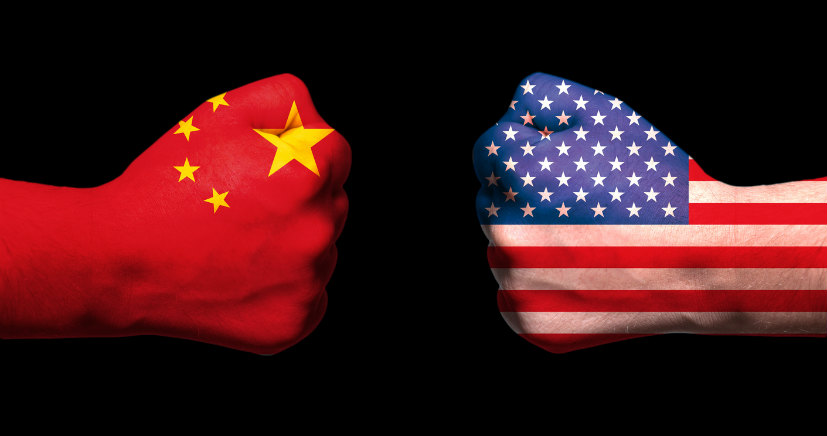
- The potential export of H200 chips to China has re-ignited the debate over the sale of AI technology to China, with RFM concluding that, on balance, the case to restrict shipments is stronger than the case to allow them.
- The two sides of this debate are in general agreement, which is that China’s rise as a technological and geopolitical power must be contained, with the disagreement being on which is the best way to achieve that goal.
- First, the case for: where the strongest pillar is that by keeping China dependent on technology from the West, the West will be able to control and contain China’s technology development.
- The idea here is that by basing its AI development on the Western platforms such as Nvidia and AMD, development of homegrown alternatives will be disincentivised.
- If sales are restricted, then China will have no choice but to develop its own, and the restrictions will have had the effect of accelerating China’s rise, not slowing it down.
- With everyone using foreign chips, the market for domestic variants will be much smaller, and hence, there will be fewer resources to develop these alternatives.
- This means that domestic development will fall further and further behind until such a point that there will be no market for it, and the whole idea fizzles out.
- This will leave China dependent on the West for AI silicon, as it is for any silicon that is made on a node more advanced than n+2 7nm, and thereby its AI development will have been contained.
- Second, the case against: which mainly hinges on the argument that selling H200s to China is equivalent to selling Saturn V rockets to the Soviets during the space race.
- The Chinese market is very different to many other markets in that it is greatly affected by the industrial policies of the state.
- China’s policy has dictated for over a decade that Chinese state-owned entities and enterprises need to get off foreign technology as quickly as possible.
- The effect of this has already been seen in the market, where Apple has taught the local companies how to make smartphones, and Tesla has taught the Chinese OEMs how to make cars.
- Tesla, in particular, is now suffering at the hands of the EV industry in China, which it originally enabled.
- Hence, history shows that China is not willing to be addicted to Western technology and is willing to spend whatever it takes to achieve technological independence.
- Hence, by selling H200s to China, the US would be helping China to keep pace in the AI race while it develops its own silicon that it would switch to as soon as practical.
- I think that overall, the case against exports is stronger than the case for exports.
- This is because both China’s statements and history clearly indicate that it is going to go to its own technology as quickly as it can, and whatever it can learn from the West to help it along will be gratefully received.
- Consequently, allowing shipments of H200 chips into China is unlikely to change or delay China’s long-term plans, and in the worst-case scenario, may even accelerate the speed at which it can become independent.
- However, I think the whole debate, while interesting, is moot because for Nvidia shipments into China to resume, President Xi has to change his mind.
- His view, as expressed through state policy, appears to be that China must achieve technological independence as quickly as possible and allowing Chinese tech titans to use foreign silicon will slow the process down.
- The only way I think that he changes his mind is if someone persuades him that using foreign silicon can accelerate the path to independence, which I think is unlikely.
- I still think that the most likely scenario is that China continues to block foreign AI silicon, meaning that the only options on the mainland are home-grown.
- This will allow China to develop cutting-edge AI models, but crucially, it will remain unable to build and run these models economically.
- Hence, when it comes to the overseas markets, no rational person would choose a Chinese system over a Western system as they will be far more expensive to build and operate.
- This is why I don’t think losing China is a big deal, as Nvidia and everyone else will make up for what they lose in China in other markets where China will not be competitive.
- This is why I think that China is behind, and that there is little scope for it to catch up, given that it will not be able to make cutting-edge hardware in China.
- This will be crucial to the ideological struggle that is being played out between China and the West, and at the moment, I continue to think it is the West that has the advantage.







Blog Comments
TLT
December 11, 2025 at 10:13 am
To be honest, I am very worried for you that in the near future, with China’s breakthrough in semiconductor technology, many of your stocks will become worthless.