

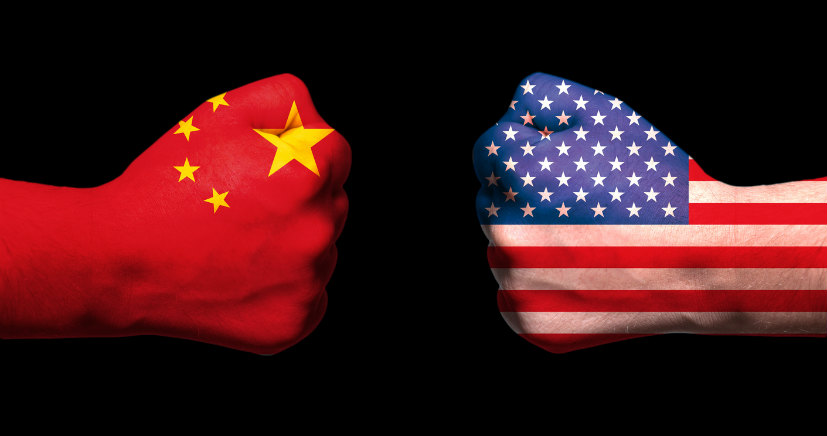
Once again, China is the agent of US policy.
- With perfect coordination, the US and China have both made rulings that pretty much have the same effect, meaning that Nvidia and AMD will still barely register any sales in China, which in the long run will be to the USA’s benefit.
- China has somewhat clarified its position on the import of H200 chips into China, stating that it will allow imports only under certain circumstances.
- This ruling is deliberately vague, meaning that the Chinese state can allow whatever it wants whenever it wants, but the broader understanding is that H200s will be allowed for things like university research.
- At the same time, a bipartisan bill has passed the US Congress that goes after the practice of non-Chinese countries building cutting-edge data centres and then selling the compute directly to China.
- In the most extreme case, the reverse appears to have happened with the supplier winning the contract with its Chinese client and then purchasing GB200s to fulfil its obligation.
- I have not seen many problems with this practice, as the stated intention is to prevent China from using AI for military and national security purposes, and I think it is extremely unlikely that China would allow these algorithms to be exported for training even to an allied nation.
- Hence, this measure is aimed at preventing the development of AI models for commercial purposes as well as to slow China’s growing competence in AI more generally.
- This will be far harder to administer and enforce than the ban on chips and semiconductor equipment, and so I suspect that the USA will struggle to make this as effective as its other actions.
- However, China continues to be far more effective at executing US policy, as its latest pronouncement appears to mean that US chips will not be shipping into China in any meaningful volume.
- Regardless of what the US does, China is progressing as fast as it can towards complete technological independence, and this remains the main strategic priority of the CCP.
- Combine this with the pronouncement today, and I take it to mean that it will import chips for the sole purpose of furthering indigenisation and technological independence.
- This is precisely what the USA is trying to slow or prevent, which is why I think that the arguments to sell advanced chips into China are weak.
- For example, selling H200’s to Alibaba could allow it to expand its cloud business significantly outside of China while Huawei works on making its Ascend chips just as good as Nvidia’s.
- At that point, Alibaba would be able to replace Nvidia with Huawei and thereby have a substantial position with Chinese technology outside of China.
- Huawei’s chips are very uncompetitive, and the signs are that the gap will widen in the coming years, meaning that without H200’s Alibaba would gain no market share overseas.
- Therefore, blocking H200s will prevent market share gain overseas by Chinese companies, and by the time that the Chinese versions are competitive, market share positions would be established that would be very difficult to reverse.
- This is what I mean when I have written that whatever Nvidia and AMD give up now, they will more than make up in the long-term in terms of share gains in overseas markets.
- This is also why I don’t think that the sale of H200s into China is a good policy from a containment perspective, but the USA is fortunate that the CCP is helping it to obtain its geopolitical goals.
- Hence, I don’t think losing China is a big deal, as Nvidia and everyone else will make up for what they lose in China in other markets where China will not be competitive.
- This is why I think that China is behind, and that there is little scope for it to catch up, given that it will not be able to make cutting-edge hardware in China.
- This will be crucial to the ideological struggle that is being played out between China and the West, and at the moment, I continue to think it is the West that has the advantage.







Blog Comments
TLT
January 14, 2026 at 11:22 am
China’s inability to manufacture advanced chips will soon become history. The EUV engineering prototype in China is already undergoing testing. China can develop AI big models that are as good as the United States even when its computing power is insufficient. It can only be said that the Western advantage will not last for a few years. In this AI competition or chip war, the West is already doomed to lose.