

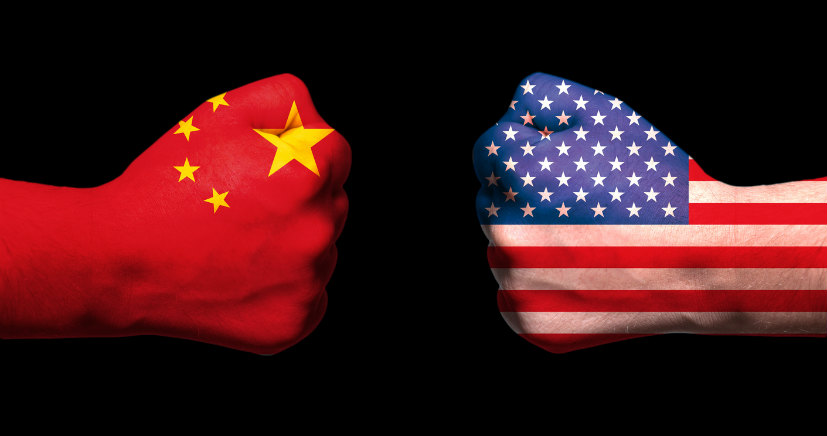
DeepSeek: 1, OpenAI: 5, Anthropic 4, Gemini: 9.
- The launch of DeepSeek V4 says more about the difficulties that China is currently experiencing in creating advanced AI models than it is a sign that China has successfully circumvented the chip blockade thanks to Huawei and Cambricon.
- DeepSeek is widely expected to launch its new foundation model, known as V4, next week, which is expected to offer more functionality and better quality responses.
- This means it can generate images and video as well as text, which will bring it into line in terms of modality with most of its peers.
- I presume that DeepSeek will then launch R2, which will be a new “reasoning” model based on V4 to replace R1 that caused such a stir 14 months ago.
- I think that this will be accompanied by commentary around how local silicon was used to train these models, supporting China’s efforts to become technologically self-sufficient.
- What is most notable is that in the last 14 months while DeepSeek has launched 1 model, OpenAI has launched 5, while Anthropic has launched 4 and Gemini 9.
- In my opinion, this is the main story of this launch, and it indicates that while China is perfectly capable of producing leading-edge models, it is having great difficulty in doing so.
- This is because the domestic silicon does not have the performance capabilities of Western silicon produced using advanced manufacturing techniques, and because it is not investing enough in data centres.
- When DeepSeek V4 launches next week, there will be much fanfare about how domestic silicon providers were used to train the model, but there is plenty of evidence to suggest that this is misleading.
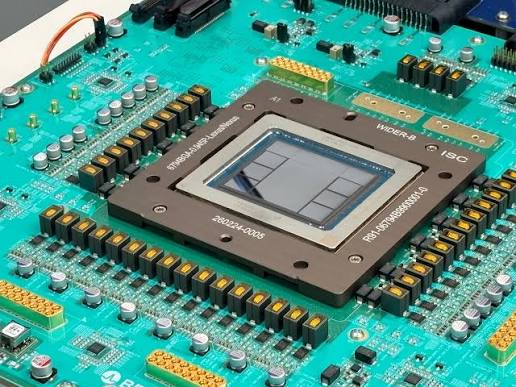
- First, domestic silicon: DeepSeek has itself admitted that its biggest limitation is the availability of silicon, and even recently, it has been reported that domestic silicon options have caused technical difficulties that prevented training.
- Second, illicit chips: Smuggled Nvidia Blackwell chips are thought to have made it to a data centre in Inner Mongolia, and that these have been used by DeepSeek to train its models.
- I am fairly sceptical that this has had a large effect on DeepSeek as the smuggled amount is supposed to be around $1bn in value, which, in the grand scheme of things, is not really enough to make a difference.
- Third, overseas data centres: which is where a Chinese company will rent capacity in parts of South East Asia, which are able to buy Western silicon and then use that for training and inference.
- This is the most credible in my opinion, as the move to open source everything means that exporting models overseas for computation is not a problem.
- I suspect that the reality is that DeepSeek has been able to solve some of the technical problems with the local silicon and has used it to some degree, but remains largely dependent on silicon from overseas.
- This is why it has been so much slower than everyone else in releasing new models, which I take as a sign that China is falling behind in the AI race.
- With Huawei’s 2026 SuperPod product requiring 11x more cabinets and 9x the power to produce the same amount of compute as Nvidia (see here), I do not see Huawei, Cambricon or any other local Chinese company being able to solve the problem anytime soon.
- Furthermore, I suspect that when the Department of Commerce updates its export rules in Q3 2026, it will put in new regulations aimed at preventing China from accessing Western chips in overseas data centres.
- Hence, I think that China will continue to fall further and further behind as a result of its inability to access advanced silicon chips, as it is already moving more slowly than everyone else.
- The USA continues to have an advantage over China in the AI race for now.






Blog Comments
TLT
March 3, 2026 at 5:57 am
Can I rephrase it? The fact that the AI technology in the United States can only maintain the same level as China despite having unrestricted access to high-performance chips shows how poor the technology level in the United States is. I can’t imagine how much leap the AI level will make once China breaks through the hardware bottleneck.