

Chip to token accelerated.
- The scale of GTC in Europe is beginning to catch up with the flagship San Jose event, in a sign that AI in Europe is just waiting to take off, just as soon as the EU can get out of the way and let the industry get on with it.
- Despite the glacial regulatory progress made since Nvidia last had a go at rousing Europe from its slumbers, it is not giving up and is making a big splash in Berlin, where its keynote was packed to the rafters and where all of the European hopefuls and partners turned up.
- To be fair to Europe, there has been progress in the private sector since GTC Paris in 2025, but many of these companies are aggressively looking elsewhere, as Europe’s surprisingly heavy participation in AI Everything Abu Dhabi and LEAP in Riyadh a couple of weeks ago indicates.
- It is on the regulatory side that the problems remain, as the AI act continues to hang over companies like the sword of Damocles, and implementation of yet another AI-related Act (The Cloud and AI Development Act (CADA)) could cost European companies up to €233bn over 10 years in compliance costs (see here).
- This is where there has been little or no movement and it is noticeable that no one at GTC is talking about regulation, with the focus being getting on with building AI
- Jensen did not say anything very new to anyone who has been following the company for a while, but everything had a European slant to it, in a clear demonstration that as long as you build on Nvidia infrastructure, the rest of the technology stack can be sourced from Europe.
- This works perfectly well as there is no credible European alternative to Nvidia, although partners were announced that will be manufacturing the Nvidia-powered racks in both France and the Czech Republic.
- This is important as there is a tangible mood in the European technology sector that it wants to reduce its dependency on US technology, and although Nvidia is a US company, it is doing its best to be as Europe-friendly as possible.
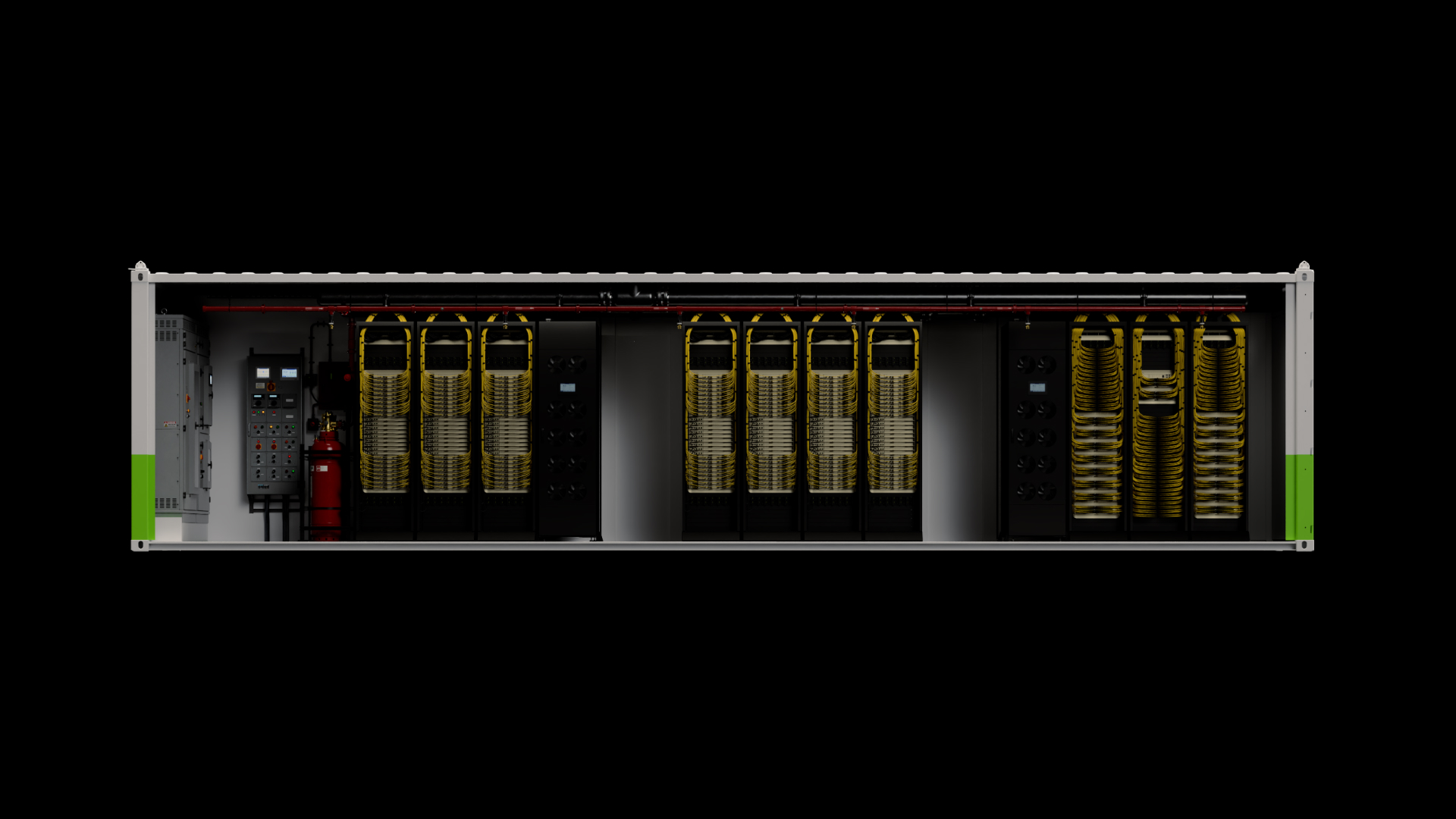
- Aside from the interruption (it would not be Europe without a protest), the highlight of the show was the launch of DSX POD, which is a time machine in a shipping container that promises to reduce the time from equipment arriving on site to producing tokens from months to a number of days.
- DSX POD is a reference design for putting 7 racks of Vera Rubin NVL72 into a shipping container with all of the supporting compute and cabling that is ready to go the minute it arrives on site.
- Each container represents roughly 1.2MW of compute and simply needs a power connection, a network connection, and a cooling system to be placed upon it to commence operations.
- This greatly speeds the time to first token and also makes it much easier to deploy AI in smaller amounts without having to build land, power and shell.
- Being in a standard shipping container makes transportation to the site much easier, and those preparing the site for arrival know exactly what to expect.
- Now more than ever, time is money as the price to rent AI compute remains at supernormal levels, meaning that the opportunity cost of having equipment hanging around for months waiting to be switched on is extremely high.
- This also represents the next level of integration that started with the DGX-1, 10 years ago, which offered a petaflop of performance, culminating in DGX POD, which will offer more than 21 ExaFLOPS of performance in a single package.
- I think that the benefit of speed and ease comes at the price of customisation, as everything is pre-integrated, although it can be used as part of a data centre that also runs other silicon in other configurations.
- Hence, this is not the solution one would deploy when disaggregating the inference workload across different silicon architectures or what one would buy when building at GW scale.
- However, it could suit enterprise buyers who want their own infrastructure or any small neo-cloud who want to start a AI compute business in their backyard.
- It could also suit other players who have small points of presence all over their markets (like telecom operators) who could install multiple units and have a low-latency service up and running fairly quickly.
- Given the returns that are currently on offer due to the scarcity of compute, this is going to be a popular product, as long as one can get one’s hands on it, which is where the problems will begin, as I suspect that Nvidia is already sold out 12 months in advance.
- Nvidia is setting an upbeat tone at GTC Europe in Berlin, just like it did in Paris and everything that it says is credible and backed up with the partners and startups who have shown up to support it.
- However, the elephant in the room remains the regulatory environment, which remains overly burdensome and badly needs to be rethought.
- Despite many promises of revision, the AI Act remains, and this new CADA act adds to the burden and could cost the AI industry nearly a quarter of a trillion Euros.
- Jensen has worked his charm on the European industry; now he needs to charm the politicians and convince them not to let this rare opportunity slip through their fingers.





Artificial Intelligence – ...
19 October 2026