
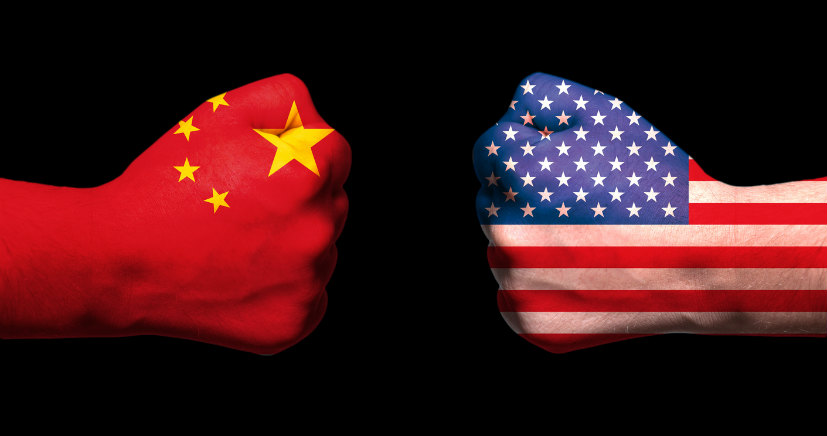
Technological independence as fast as possible.
- Regardless of what the US does, China is going as fast as it possibly can towards technological independence, meaning that helping it along by selling it H200 chips makes very little sense at all.
- Consequently, China is helping the USA achieve its policy objectives by continuing to block the shipments of H200 chips into China.
- The latest indication of Chinese policy comes as suppliers of components like printed circuit boards and components for data centre cabinets have paused manufacturing as local Chinese customs officials are still blocking imports of H200 into China.
- To be fair to China, its officials have been unusually clear on this matter as logistics companies were told last week that they should not submit customs clearance forms for Nvidia’s H200 chips.
- This flies directly against the excitement a couple of weeks ago when it was thought that China would begin to allow the imports.
- However, the ruling was fairly vague, with the most likely interpretation being that H200s would be allowed to be imported for research purposes, such as at universities.
- This is the clearest statement yet of what China’s real purposes are, other than the Made in China 2025 strategy, which also spelled out its intentions in unambiguous form.
- This is the state-mandated requirement to achieve technological independence such that whatever the USA or anyone else does, it has no impact on the speed and quality of technology produced by China.
- One opinion that exists in the US Administration (and championed by Nvidia, AMD, etc.) is that by selling the Chinese US technology, it will slow its progress towards independence and make it dependent on US technology.
- There is an argument for this opinion, but it is clear that regardless of what the US does, the Chinese are pedal to the metal on technological independence, meaning that it cannot be slowed by selling China US technology.
- Furthermore, I take “research purposes” to mean helping China to use imported technology to accelerate technological independence, meaning that it would be better for the US not to export any chips at all to China.
- The USA does not appear to be willing to do this thanks to the lobbying of Nvidia, AMD and so on, and so once again, the policy of the Chinese state is far more effective at helping the US to achieve its aims than the US State Department has been.
- The net result is that I continue to think that Nvidia and AMD will lose all the business that they have in China, but in the long run, they will more than make up for this in overseas markets.
- For example, selling H200’s to Alibaba could allow it to expand its cloud business significantly outside of China while Huawei works on making its Ascend chips just as good as Nvidia’s.
- At that point, Alibaba would be able to replace Nvidia with Huawei and thereby have a substantial position with Chinese technology outside of China.
- Huawei’s chips are very uncompetitive, and the signs are that the gap will widen in the coming years, meaning that without H200’s Chinese companies will gain no market share overseas.
- Therefore, blocking H200s will prevent market share gain overseas by Chinese companies, and by the time that the Chinese versions are competitive, market share positions would be established that would be much more difficult to reverse.
- Hence, I don’t think losing China is a big deal, as Nvidia and everyone else will make up for what they lose in China in other markets where China will not be competitive.
- This is why I think that China is behind, and that there is little scope for it to catch up, given that it will not be able to make cutting-edge hardware in China.
- This will be crucial to the ideological struggle that is being played out between China and the West, and at the moment, I continue to think it is the West that has the advantage.