

India must act to avoid Europe’s disappointment
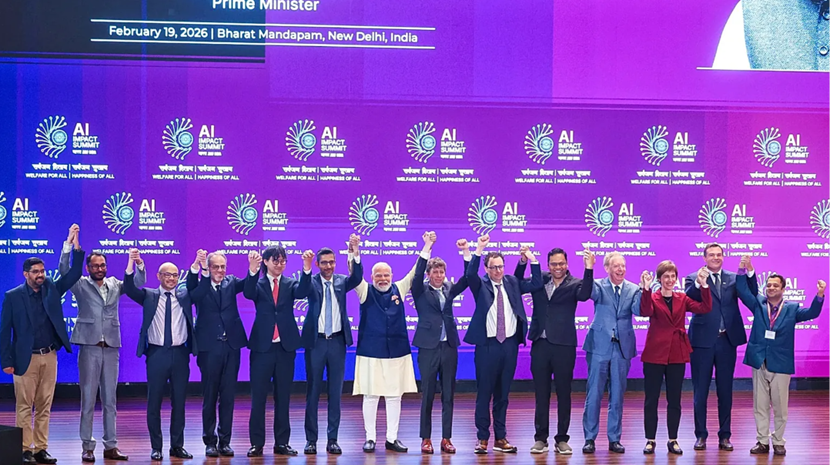
- India has gathered together the leaders of AI as well as 20 heads of state to layout its ambitions to be a player in AI, and with a large proportion of its workforce potentially disrupted by new technology, there is a lot at stake.
- This week has seen India host its AI Impact Summit, where Sundar Pirchai, Sam Altman, Dario Amodei, Demis Hassabis and many others all made an appearance.
- However, the summit was not without controversy as Bill Gates pulled out at the last minute, and thousands of delegates were locked out of the venue, causing chaos when Narendra Modi arrived to tour the floor and host his session.
- However, the only way to look at this is as a success for India, given how it has been able to attract pretty much every big name in AI, and now it has a platform from which to build its ambitions.
- At the same time, Sarvam AI has launched Sovereign models for India, which in this instance, are likely to attract a lot of interest.
- The user experience has been fully optimised for voice, as over half of the 1.45bn Indian population is unable to read or write.
- It also supports 22 Indian dialects and has been trained on Indian-specific data, making it far more relevant to the local population.
- There are two models, one of which is 30bn parameters and the other, which is 105bn, both of which will be running in the cloud in India.
- This means that the amount of compute that is available in India immediately becomes an issue, and here I can see problems.
- According to PIB Research (a branch of the Indian state), there is currently 1.3GW of data centre capacity and 38,000 GPUs, which need to be dramatically expanded if AI in India is going to take off in a big way.
- The plans are to expand this by 4x to 5x by 2030, but India’s position is in the queue to buy GPUs from Nvidia and AMD, and memory from SK Hynix, Micron, and Samsung is uncertain.
- As part of their 2026 expansion, Google is building what looks like 500MW and AWS 250MW, but a lot more is going to be needed if the Indian IT industry is to be transformed and 1.45bn people are going to start using AI in their daily lives.
- This is where India needs to follow up the talking shop with action.
- In the middle of 2025, Nvidia made a commitment to help Europe boost its AI ambitions with a big splash at VivaTech in Paris, but since that time, almost nothing has happened.
- Instead, Europe has squandered 8 months going round in circles, wondering how it can regulate an industry that does not yet exist.
- In the meantime, the Middle East has jumped on Europe’s lack of action and is successfully attracting talent and making investments in building out capacity in the region.
- With a large population that is more IT literate than word literate and an electricity grid already under expansion, India has an opportunity to harness AI.
- This is important for India, where much of the world’s backend IT processes have been outsourced over the last 30 years.
- These sorts of jobs are at great risk of being made obsolete by AI agents, and so India needs to get ahead of this trend and make sure that it can make the most of this transition.
- I don’t think that these jobs are going to go away, but much more will be expected from them as there will be AI running in the background that will perform a lot of the basic functions.
- Hence, if India can build the capacity at home to serve these functions, then there is a good chance that India’s IT outsourcing industry will change, as opposed to being decimated.
- Just as it was for Europe, the talking is done, the time for action is now.








Blog Comments
Karthik Srinivasan
February 21, 2026 at 4:03 pm
If things change within 8 months and stuff could move from EU to UAE, then do you think India has a chance?
A couple of clarifications:
In “as over half of the 1.45bn Indian population is unable to read or write”, do you mean Read/Write in English?
“With a large population that is more IT literate than word literate” – How is this possible?