

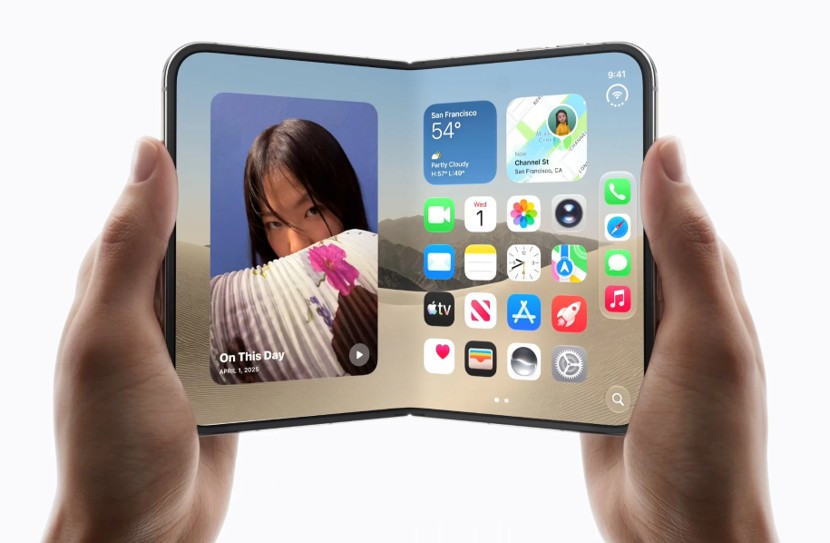
Apple gets the fold right.
- Behind the glitz of a folding iPhone, we got a glimpse of how John Ternus intends to keep Apple on top, which is to ensure that the iPhone remains at the centre of the digital universe, but to do that, he needs to make AI work, which was the weak point of this event.
- With a new product category to launch, this was an easy event for John Ternus to ace, and the glitz of the iPhone Duo led observers to ignore the rather dull and unexciting delivery of the presentation.
- First, iPhone 18 Pro, 18 Pro Max: which represent incremental upgrades on devices that look almost exactly the same as their predecessors.
- However, the internals have been upgraded with new cameras now supporting physical apertures, more battery life and faster charging.
- The most remarkable upgrade was the upgrade to price, which will now be $100 as a result of the increase in memory prices, which shows no sign of abating.
- Second, Watch and AirPods: which have also seen incremental upgrades, but thankfully for users, there has been no price change.
- The most remarkable change here is to software, where Apple is doubling down on the health and fitness use case of the Apple Watch.
- It is trying to copy Oura’s wellness analysis, but I think it fails here because one has to wear the watch when one sleeps, as opposed to the much more comfortable and convenient ring.
- Apple has also overhauled the health app to make the integration of health and wellness data easier to view and understand.
- Apple is also leveraging the watch to push a new service called Audio Intelligence, which is an ambient system that transcribes speech and recognises sounds in the environment.
- This sounds great but immediately raises issues similar to having a smart speaker listening for the wake word constantly.
- I am not convinced that this feature is going to get much traction, and I will immediately turn it off if it comes to my Apple Watch.
- Third, iPhone Duo: which was undoubtedly the star of the show and drove almost all of the interest.
- The main difference here is the size, where Apple has considered the use case of the device when deciding on the screen size and aspect ratio.
- This is why it is an unusual size of 1 to 1.4 both inside and out, meaning that apps and content can make the most of the screen in either configuration.
- One only has to look at the transition from one configuration to another, which is excellent and typical of Apple, to get an idea of how much thought has gone into this product.
- Apple has also put a lot of effort into eliminating the crease, and to be fair, this is by far the least observable crease that I have seen on a folding screen, greatly reducing one of the greatest complaints about folding phones in general.
- Apple is also using a new cellular modem in the iPhone Duo, the C2, which clears the way for the entire lineup to move to its in-house radio modem in 2027.
- This release confirms that Apple has finally hit maturity in 5G and will no longer need to rely on Qualcomm, at least until 6G comes around and then the whole cycle will start again.
- The entry-level price ($1,999) is competitive with competitors from Samsung, China and Google, but anyone who wants the most storage will be paying a crazy $3,199, which is enough to buy a MacBook Pro.
- The net result is that the thought that has gone into this product increases the attractiveness of the foldable segment, and if this increases its paltry share from 2% to something more relevant, it might start to have a big impact on Apple.
- However, for the moment, the largest impact is likely to be iPhone Pro Max users upgrading and spending $2,000+ instead of $1,300+ for a new device, which may lift Apple’s revenue growth next fiscal year a couple of points.
- With the shares already trading on 32.9x 12-month forward PER, and less than 10% growth, they continue to look unexciting, especially as the AI issue remains largely unsolved.








Blog Comments
Alex Collins
September 10, 2026 at 7:57 pm
I think you might be underestimating the Apple Intelligence story. I’ve been building apps for iPhone recently and I’ve been using Claude Code to build them. The cost of building an app is probably 1/10 what it was. Regarding the on-device LLM, it’s frankly, garbage. Not useful for even the most paltry tasks, not even very good at text summarization. However, apps that use it can upgrade to Private Cloud Compute, and then to Anthropic and OpenAI frontier models. I will soon be able to easily develop an app for iPhone that uses frontier agents with tool use. One top of that, the always-on Siri. What I think is missing is the ability to use your own Anthropic account with your apps. You can support pasting of API tokens into the app, but that’s really it.
RICHARD WINDSOR
September 11, 2026 at 8:54 am
Thats very interesting. Problem is that Apple needs developers to use its in house AI otherwise differentation starts to wane. This could lead to market share loss to Android if AI becomes a large part of teh UX.