

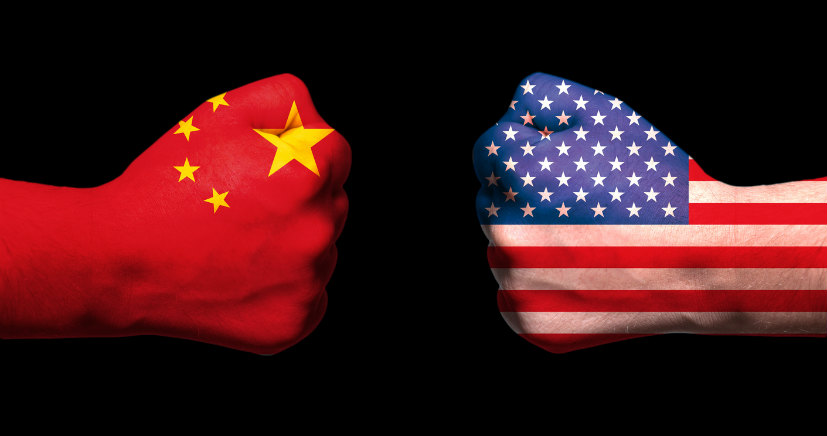
Everyone says it. No one means it.
- President Xi has headlined the World AI Conference in Shanghai with a message of global co-operation, but just like OpenAI and Anthropic, what he really means is an accumulation of wealth and influence for China.
- OpenAI started the trend of creating AI for the good of all humanity, with Anthropic following right behind, but the way to judge their sincerity is to look at their actions rather than their words.
- Ever since the possibility of making large capital returns and gaining global influence from AI has emerged, both of these companies have acted in their own best interest and paid little more than lip service to the benefit of humanity.
- President Xi’s speech is similar in that it positions China as a champion of AI for everyone, but at the same time, his regulators are holding discussions with Alibaba, ByteDance, Z.ai and so on about limiting and controlling the AI models that they create to preserve China’s advantage.
- Furthermore, China intends to help countries in the Global South expand their AI capacity with open-source models and training courses, but it stops short of handing out money.
- There is also no money or stimulus being offered domestically, which is resulting in a large correction in Chinese AI and technology stocks, where z.ai and Minimax are down over 15%.
- For all the pomp and ceremony, the Chinese technology sector remains moribund, with many of the new high-flying stocks having long since given up their gains and are now returning losses.
- Consequently, this looks like a continuation and extension of the Belt and Road Initiative, where China is seeking to increase its economic and geopolitical influence through the sharing of technology.
- China’s strategy in AI looks like a rinse-and-repeat of its highly successful takeover of the solar panel industry and its strategy in the automotive industry, which is also beginning to bear fruit.
- This is why China has taken the open source route, as this makes Chinese models easy and cost-effective to use, and because they are also open-weight, one can download, fine-tune, and run them on in-house, private infrastructure.
- They are also much smaller and much more efficient than many of their US competitors, making them great for small companies and developers who run everything on a few Mac Minis.
- For the AI industry as a whole, this is good news because Chinese models now make up around 60% of all token production (OpenRouter) and, as such, represent a substantial competitive threat to the existing oligopoly.
- Such a large competitive threat is not going to go unanswered, and I suspect that as cost pressures grow, more non-Chinese open source models will become available.
- China has demonstrated that it is every bit as good as the USA when it comes to developing AI models, but its Achilles’ heel remains in the hardware and infrastructure that is used to train and run inference on these models.
- Here, China remains very far behind where Nvidia, AMD and everyone else are, and as time passes, this gap is only going to get bigger.
- This is because China is unable to produce AI silicon using advanced semiconductor manufacturing processes, meaning that’s its silicon is severely underpowered and China cannot produce nearly enough for its own demand, let alone anyone else’s
- This means that China’s competitive position with its models is dependent on its models running on non-Chinese hardware, which will make it difficult to concentrate the AI industry in China, like it did in solar panels.
- It also means that while 3rd party countries may well adopt Chinese models, they will run those models on silicon made by USA companies.
- This will prevent China from repeating the lock-in that it has achieved in solar panels, meaning that the field in the mass market for “good-enough” AI will remain open and competitive.
- Hence, the AI industry is not really an idealistic paradise of advanced AI for the benefit of humanity, but a battle-ground where the ideological struggle between the UDA and China continues to be fought.
- China is doing extremely well further up the technology stack, but when it comes to hardware, its disadvantage, which is likely to remain for the foreseeable future, hands an advantage to the USA and its allies.






Blog Comments
tlt
July 17, 2026 at 3:44 pm
Let me explain your article from another perspective: The current AI competition situation fully demonstrates that once China makes a breakthrough in chip manufacturing, Western (basically American) AI will be completely defeated, which will be the biggest nightmare for the West. The question is, how long can the West stop China?